A payment platform built for an industry traditional banking has stopped serving well.
The maritime sector moves a quarter of global trade across borders that change with every voyage. The payment infrastructure available to maritime operators has not kept pace. Correspondent banking corridors between Europe, Latin America and Africa have narrowed. De-risking has reduced jurisdictional coverage in precisely the regions maritime trade depends on.
Settlement times are still measured in days when port costs accumulate by the hour. And the rise of stablecoins as a treasury layer has left a gap between how Global South operators hold value and how counterparties — in Europe and across the corridor — accept payment.
BunkerPay was built to close that gap.
Why we exist
A structural disconnect at the heart of maritime payments.
Shipyards, fuel suppliers, port authorities, ship chandlers and disbursement accounts across Europe, LATAM and Africa operate within the traditional banking system — and will continue to. Their workflows are built around SEPA, SWIFT, IBANs and local payment networks.
What has changed is the operator side. A growing share of international maritime business is conducted by entities for whom traditional USD or EUR banking is restricted, expensive or unavailable — particularly in the LATAM and African corridors.
What we built
A corridor network that bridges both sides.
BunkerPay is the single relationship a maritime operator needs to access regulated payment infrastructure across Europe, Latin America and Africa. Clients fund their account in EUR, USD, USDC or USDT, hold funds in a multi-currency IBAN issued by our FCA-authorised UK Payment Institution partner, and settle through SEPA, SWIFT or supported local rails — to whichever maritime counterparty they need to pay, anywhere in the corridor. One team, one onboarding, one dashboard. BunkerPay orchestrates; partners deliver the regulated services.
"Europe, LATAM and Africa run on different rails. BunkerPay connects them for maritime payments."
How we operate
Operating principles for an institutional payment platform.
BunkerPay is a payment platform focused on the maritime sector. We are not a bank. We are not a stablecoin issuer. We are not a broker. We are infrastructure — designed to sit between how maritime operators hold value and how maritime counterparties receive payment, across each corridor we serve.
01
Regulated rails, end to end
Every transaction processed through BunkerPay runs on infrastructure provided by institutions authorised and regulated by the FCA in the UK and Banco de España in the EU. We do not operate outside regulated channels.
02
Client funds in safeguarding accounts
Funds belonging to BunkerPay clients are held in dedicated safeguarding accounts, separated from the platform's operating funds — a structural protection required by the regulatory frameworks under which our infrastructure operates.
03
Transparent pricing, before execution
Every conversion rate, every fee, every settlement charge is disclosed before execution. Clients see what they are paying. Where we cannot offer an improvement on the client's existing arrangement, we will say so.
04
Designed for institutional documentation
Treasury teams, auditors and compliance functions can request the documentation they need. KYC, transaction reporting, settlement confirmations and audit trail produced to the standard institutional finance functions expect.
Who we serve
Designed for maritime business across the corridor.
Our role is the same in every direction of the network: route the payment through the rail it actually needs to take, on infrastructure that meets institutional regulatory standards, in a manner the counterparty's bank recognises and accepts.
Inbound corridor
LATAM & AFRICA → EUROPE
Maritime operators in LATAM and Africa
Ship owners, ship managers, traders and operators paying European maritime counterparties — funded from stablecoin, USD, EUR or local-currency balances.
European shipyards and dry dock
European port disbursement accounts
Bunker invoices in EUR or USD
Chandler and agency payments
Outbound corridor
EUROPE → LATAM & AFRICA
Spanish and European maritime companies
Bunker traders, ship managers, port agents, shipyards and suppliers settling to LATAM and African counterparties.
EUR-to-USD treasury conversion
Stablecoin acquisition for treasury
Local-currency settlement in LATAM/Africa
Multi-currency vessel runs
Multi-corridor
MULTI-DIRECTION
Maritime business between regions
Companies whose operations span Europe, LATAM and Africa, with payment needs that move in multiple directions across one fleet or charter cycle.
Multi-leg voyage payments
Inter-regional charter settlement
Fleet treasury orchestration
One regulated payment relationship
Origin
Built from inside the industry it serves.
The founder of BunkerPay spent years operating commercial vessels and saw, first hand, how poorly the existing payment landscape served the maritime sector. Delayed settlements while port costs accumulated. FX markups bearing no relationship to interbank prices. Correspondent banking chains that introduced friction at every hop. Counterparties in jurisdictions where access to USD or EUR banking was restricted or unreliable.
What was missing was not another fintech. It was payment infrastructure built specifically for how the maritime industry actually moves money — between currencies, between rails, between counterparties on three continents that were never going to change their banking process to suit the operator's. That is BunkerPay.
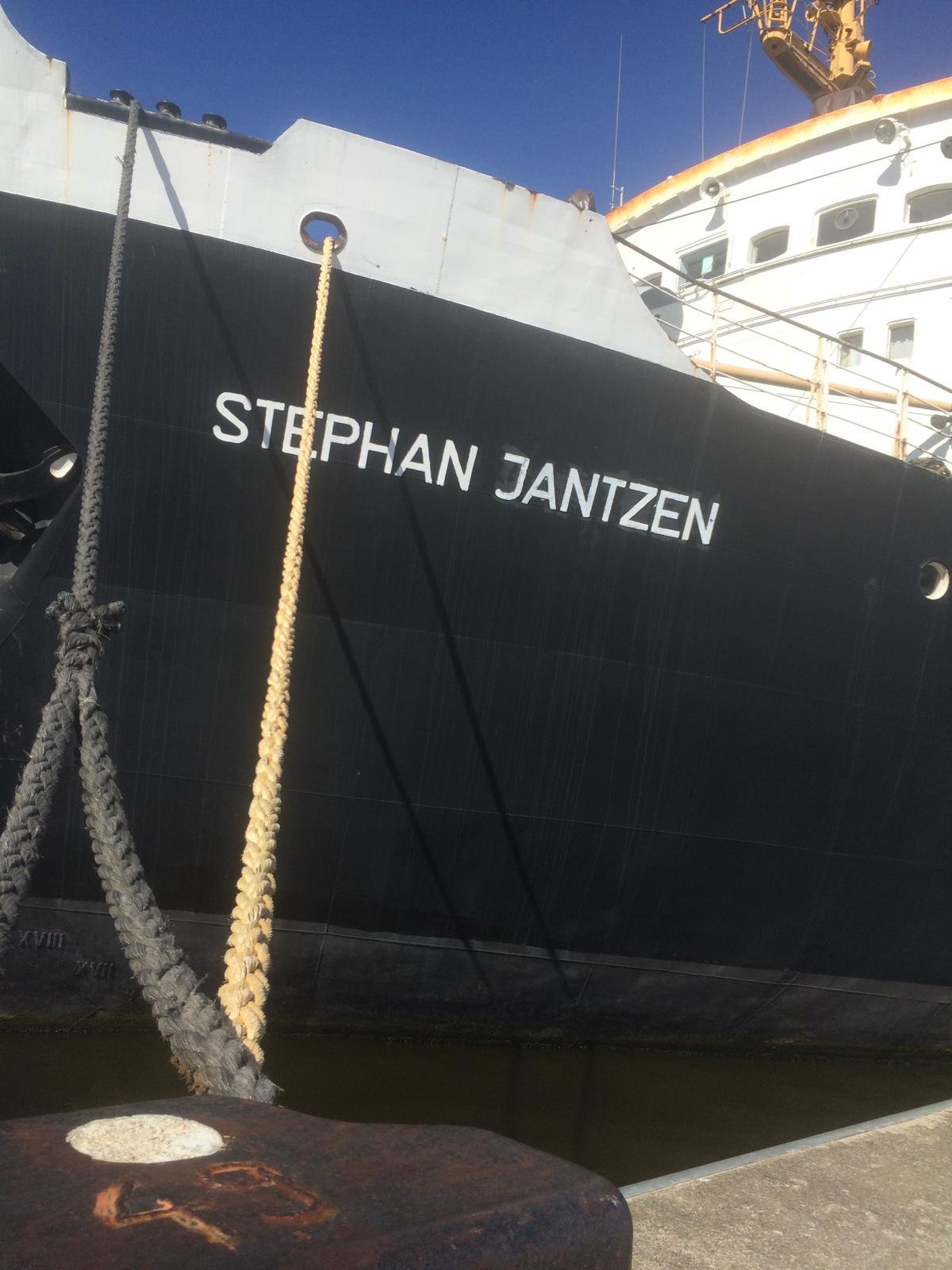
Stephan Jantzen · 2009The founder's vessel · commercial maritime operations
Governance and regulatory posture
Careful language, by design.
BunkerPay Ltd is not a regulated payment institution. BunkerPay is the platform our clients use to access regulated payment, currency and stablecoin conversion infrastructure provided exclusively by institutions authorised and regulated by the Financial Conduct Authority (UK), Banco de España (EU) and the Financial Services Commission of Bulgaria.
We are deliberate about how we describe this relationship. BunkerPay does not hold a payment institution licence in its own right; clients access regulated rails through partners that do. Every transaction arranged through BunkerPay is executed by a partner subject to the supervisory standards applied to FCA-authorised payment institutions and electronic money institutions in the UK, to payment institutions and electronic money institutions authorised by Banco de España in Spain, and to Virtual Asset Service Providers registered with the Financial Services Commission of Bulgaria. Client funds are held in safeguarding accounts at the relevant regulated partner institution.
Operating on regulated infrastructure is a structurally different statement from holding a regulatory licence — and we are careful never to conflate the two.
Contact and offices
Speak to the BunkerPay team.
For corporate account enquiries, payment route assessments or treasury team conversations, our team responds within one business day. Active corridors across Europe, LATAM and Africa.
United Kingdom
Registered office
Primary operating jurisdiction. UK regulated infrastructure provided by FCA-authorised institutions.
Spain
EU partner network
EU corridor anchor. Regulated infrastructure accessed through institutions authorised by Banco de España.
Corridor coverage
EU · LATAM · Africa
Active payment corridors across all three regions, with route mapping conducted for each new client engagement.
Payment route assessment
Every maritime payment has an optimal route.
The optimal route depends on where the payment originates, where it needs to land, what currency or asset funds the transaction, and what the counterparty's bank accepts. Our team performs payment route assessments for new client engagements — without obligation, before any account is opened.
01
Origin
Where the payment is funded — fiat treasury, stablecoin balance, or local currency.
02
Destination
Where the funds need to arrive — region, banking, currency of the counterparty.
03
Asset class
EUR, USD, GBP, USDC, USDT or local currency — what funds the transaction.
04
Rail
SEPA, SWIFT or local rail — what the counterparty's bank accepts.